 MONEY!
It is one of those things in life that people both love and hate!
Unfortunately, money can negatively impact both your physical and mental health. Being in debt and missing payments can cause physical health problems such as ulcers and can affect depression and chronic stress. Even if you are not in debt, money can be a burden on your life and your relationship.
That is because you enter adulthood with a money story. Your money story can change and develop as you find your place in the world.
So what exactly is a money story?
Your money story is how you look at and react to different financial situations. It is based on how you grew up and the struggles or benefits you had.
To start writing your money story think about:
- What was your family’s financial status growing up?
- Did you get the things you needed or were there times you went without?
- Did your family have an extreme increase or decrease (lost job or inheritance)?
- What did your family teach you about money?
- What is your current relationship with money?
- What about money now makes you feel positive or negative?
- What do you feel money can buy?
- Write a paragraph about money and see what pops up.
Your money story affects your mental health when your life is not congruent to the thoughts you have about money.
Let’s say for example your money story includes growing up with a decent amount of money. You had everything that you needed plus most of what you wanted. Your parents prided themselves on being able to provide. You saw that your parents worked hard, but maybe you did not see them very often because of that.
As an adult raising a family you now struggle with making money and balancing that with having a family. You live paycheck to paycheck. You struggle with wanting to make more money and wanting to be home. Your struggles come from the incongruency in your life and your story.
Recognizing your money story can help you understand the stress you feel. It is a starting point to dive into what is most important and begin to accept or change where you are.
Stephanie Steen, Registered Mental Health Counseling Intern is a therapist in Melbourne FL. She works with women who are in the middle of a major life transition (divorce, loss of job) and helps them to see the light at the end of the tunnel so they can begin living authentically again. She shares tips on regaining happiness on her Facebook Page and website.
Autumn Hahn is a Licensed Mental Health Counselor and Certified Clinical Hypnotherapist practicing at Clear Mind Group in Weston, Florida. Call 954-612-9553 for a consultation. Follow Autumn on Twitter, Facebook, and Google+. Sign up for the e-newsletter HERE.

 A friend called me the other day raving about the new gadget that she had saved for, shopped for, invested in, and finally owned. Two weeks later I asked her about it:
 We cannot control others. You’ve heard this. The good news is: we don’t have to! We need only control our response to others, which is totally doable.
 Cure your insomnia once and for good with self-hypnosis.
 When I meet someone new, inevitably, they ask “What do you do for a living?” There’s always a moment of awkward silence where I figure out what to state first – usually whatever has the newest project happening or what I think will resonate with the listener. My friends always laugh in that pause because they know there’s a litany of answers coming. My husband says he has the same pause when people ask “What does your wife do? Is she in software, too?” My husband has a 9-5 job, just one, but is also co-owner of our board game business.
 Watching clients transform is my favorite thing!
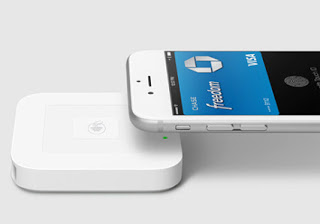 We use technology for the most secure and convenient payment methods possible. We have a chip reader that protects you against the magstripe having fraudulent charges.
 I told you last week, that I’ve been in a funk. As a mental health counselor, it’s my responsibility to be a good example, to shake off any stigma, and do what needs to be done to get well. That is why I’m sharing this with you, despite being fairly private about my personal life to clients.
 Clinical depression is categorized in a number of ways and the ways it effects you may be different from the ways it effects others. There may be no preceding event and no “good reason” for feeling so sad, but you may feel the weight of sadness just the same. It can come on in waves, or suddenly, or gradually – and all of that is perfectly normal.
 Short-Term Therapy