
Symptoms as Obstacles

Design composed of girl profile colorful fractal butterfly patterns and abstract lights on the subject of beauty creativity and imagination

I have ADHD. I’m sure I’ve always had it, but got diagnosed at 40 because I was tired of working so hard when focusing on things seemed easy for others. Since then, I’ve been on a daily medication, that helps quite a bit. I can focus on one thing for 90 minutes, which was nearly impossible before.

When you have symptoms of any disorder, or medical condition, that is your obstacle to overcome. Some things are overcome by medicine, others habits or routines, and some things will just be a struggle. But it is yours to overcome, and not an excuse for a lack of trying.

For example, let’s say you have asthma. Running a marathon may be a poor choice for you, and you should work with your body to do what makes sense. But if running a marathon was your life’s ambition, you might discuss it with your doctor, work up the stamina to run longer distances over time, and still carry your rescue inhaler. Your obstacle to work around is sustained lung capacity – which your body may or may not tolerate.

Since this is a mental health blog, let’s say instead that you have bipolar disorder which causes your mood to be both depressed then elevated with impulsivity. One way to balance that out is a mood stabilizer. You might also track your mood in a journal or on an app so you are prepared for when the manic phase is coming. Since you are impulsive when manic, you might give your credit cards to a trusted person during those days so you don’t overspend. Your obstacle is to work around the impulsivity and know when the manic phase will be arriving by tracking your mood.

Back to my ADHD example, I hate a task before a task. It takes an amount of executive function to begin a task that can be difficult to summon, so putting another in the way is frustrating and can make me want to quit. I know that my medication starts to wear off by 7pm, so I do well to get those high-executive-function tasks out of the way before then. A way this often comes up is in cleaning the cat box. I have to sweep the hall and laundry room of cat litter before I can get to the box. Sometimes I have to only sweep, and come back later to do the box. I can’t just not clean the box, so blaming ADHD is insufficient. I have to work around the obstacle of task-before-a-task frustration by separating it into two discrete tasks, and doing it before it is late in the evening.

Everyone has different obstacles, even within the same symptoms or diagnoses. That’s why cookie-cutter therapy does not work. We have to determine, for you, your obstacles, and how to help you work around them with grace.

Autumn Hahn is a Licensed Mental Health Counselor, Licensed Clinical Professional Counselor, and Certified Clinical Hypnotherapist practicing at Clear Mind Group in Florida, Georgia, Idaho, Nevada, New York, and Virginia. Call 407-494-5280 for a consultation. Follow Clear Mind Group on Twitter & Facebook.

What are triggers?

A piece of jargon that gets gets wrong (wrongly?) is “trigger warning.” Triggers are things that remind the nervous system of a negative past event. The system responds as if the bad thing is happening, and this can be confusing, because the logical and rational mind knows the bad thing is not happening, but the subconscious part says “similar is same” and responds. This happens to protect us from further harm.

It is impossible to warn that something is a trigger as one has no idea what will trigger a person if they have not disclosed their triggers. A trigger can be a scene, like rape or war, or someone’s appearance, the way the light hits an object, the way a person moves, speaks, holds their head, or walks. These triggers may be unknown even to the triggered person because it’s happening that deeply.

Content, by contrast, is a scene that may be a trigger to big groups of people, like war or rape, violence, gore, vehicular crashes, or animal cruelty. So content can be triggering, but is not necessarily so.

I like that people use content warnings. I’m a person who likes horror movies, but I don’t like gore, animal cruelty, or gratuitous violence. None of these things, however, are trauma triggers to me; I just dislike them. I like that people are trying to do well by others by labeling things with warnings and I appreciate the efforts. I do, however, want to provide some additional education that you’re not doing the thing you intend with that particular label.

TL;DR: Trigger warnings are impractical, but content warnings are useful.

Autumn Hahn is a Licensed Mental Health Counselor, Licensed Clinical Professional Counselor, and Certified Clinical Hypnotherapist practicing at Clear Mind Group in Florida, Georgia, Idaho, Nevada, New York, and Virginia. Call 407-494-5280 for a consultation. Follow Clear Mind Group on Twitter & Facebook.

Why me? and It’s not fair.

person walking in rain with red umbrella at night

When a traumatic event happens, most people are left with the question “Why me?” and the feeling of “It’s not fair.” What do you do with those and how do you move beyond the stuck feeling they leave you?

It’s not fair. No, it’s not. Much of real life isn’t fair and this thing is also not fair. There’s no making it fair. There’s no making it right. It was a terrible thing and it doesn’t have to be better or make sense or fit in with an idealized version of reality. Some things just suck and this is one of them. It’s okay that this is how it went down. Fighting the unfairness of it is futile. Allow it to be unfair and you’ll stop coming up against this obstacle.

Why me? No reason, or maybe some reason that isn’t useful to speculate. People do terrible things. Sometimes they’re terrible people, and sometimes not, but done is done. It sucks that it happened to you. Crappy things happen to people all the time and you’re one of the people that had a crappy thing (or series of crappy things) happen to them. Spending your energy trying to solve this is a wasted time.

I get that that this doesn’t sound positive or hopeful. I’m not trying to be a ray of sunshine as I think that’s too far from the truth and wouldn’t be useful anyhow. If you are throwing yourself against these walls and stuck on them, the way past them is through understanding that they don’t have to be fixed to be understood. This is only one piece of the healing, but it’s a crucial piece if its a place where you’re repeatedly finding yourself.

Autumn Hahn is a Licensed Mental Health Counselor, Licensed Clinical Professional Counselor, and Certified Clinical Hypnotherapist practicing at Clear Mind Group in Florida, Georgia, Idaho, Nevada, New York, and Virginia. Call 407-494-5280 for a consultation. Follow Clear Mind Group on Twitter & Facebook.

Be Here Now

Have you been feeling unmoored from your body, your sense of self, or your life? Do you feel adrift, unhinged, untethered, or in need of grounding? Have you been spinning out of control in your thoughts and unable to gain traction?

Try this mantra: “Be here now.” But say it like each word is a sentence: Be. Here. Now.

With each word, do it.

Be. Be in your body. Notice your body, the weight of it, the position it is in, the feeling of any fabric or material on your skin, and any movement of the air.

Here. In this place. Where you are, with anything you can notice around you, eyes open or closed. Engage your senses: see, hear, smell, taste, feel – to notice absolutely anything.

Now. In this moment, the only moment that exists, present as best you can, eliminating thoughts of past and future as best you can right now. It might be difficult and that’s okay; just do your best and reset and reset again if you need to.

Autumn Hahn is a Licensed Mental Health Counselor, Licensed Clinical Professional Counselor, and Certified Clinical Hypnotherapist practicing at Clear Mind Group in Florida, Georgia, Idaho, Nevada, New York, and Virginia. Call 407-494-5280 for a consultation. Follow Clear Mind Group on Twitter & Facebook.

What is a Trauma-Informed Therapist?

What’s this buzzword “trauma-informed” mean? Trauma-informed means that the therapist has been trained to see client behaviors as symptoms of trauma, instead of as dysfunction.

Why is being trauma-informed useful? Understanding things from a trauma perspective allows a therapist to view the client as a whole person from the angle of trauma, with the behaviors as a function of trauma, as a means to an end, a repeating of negative patterns, a way they adapted to their environment. It allows the therapist to see the client outside of negative labels such as: willful, inappropriate, manipulative, or staff-splitting. This is especially useful for people who have developed personality disorders like borderline personality disorder. Seeing clients differently allows us to act differently and treat the behaviors with more care and usefulness.

Trauma-Informed vs. Trauma Specialist Is a trauma-informed therapist the same as a trauma specialist? No. There has been a big push to get therapists trained in trauma-informed care over the past 5 years or so, which is wonderful. This often consists of a single introductory-level training which may be only a couple of hours. A trauma specialist, by contrast, has been training in trauma-related treatments for at least dozens of hours, generally over many years. Personally, I have trained hundreds of hours over a decade in various trauma-related treatments over a decade.

Autumn Hahn is a Licensed Mental Health Counselor, Licensed Clinical Professional Counselor, and Certified Clinical Hypnotherapist practicing at Clear Mind Group in Florida, Georgia, Idaho, Nevada, New York, and Virginia. Call 407-494-5280 for a consultation. Follow Clear Mind Group on Twitter & Facebook.

On Victim Blaming

The only people who rape are rapists. Full stop.

If an attractive person, without a stitch of clothing on, appeared in front of you, I would hope that your reaction would be to get that person to safety, offering a way to cover them, and the ability to get to a place where they will be okay. If your first reaction is to attempt to have sex with them, this is problematic behavior.

This sounds like farce, right? But if you listen to victim blaming, they will say “If they weren’t dressed like that” or “if they weren’t in that place” or “if they were sober at the time” as justification for rape.

At no time, would I consider forcing or coercing someone to have sex with me. I hope that is true for you, also. That makes us not rapists! If someone were not sober, were dressed scantily, and/or were in a place that was unsafe, I would, and I hope you would, get them to safety as your first order of business.

Autumn Hahn is a Licensed Mental Health Counselor, Licensed Clinical Professional Counselor, and Certified Clinical Hypnotherapist practicing at Clear Mind Group in Florida, Georgia, Idaho, Nevada, New York, and Virginia. Call 407-494-5280 for a consultation. Follow Clear Mind Group on Twitter & Facebook.

Secondary Trauma?

waves crashing on rocks

I’m hearing the term “secondary trauma” misused frequently. Let’s learn what the different kinds of trauma are.

Trauma is an experience that leaves a negative impact on a person. This is usually caused by a single event (such as, but not limited to: car accident, rape, mugging, natural disaster, or neighborhood violence).

Secondary trauma is what happens to a person in the processing of that event. For example: a person is raped and knows the rapist. They press charges and, as have to give physical evidence, be questioned by police and lawyers, and appear in court facing their abuser. Each step may increase the trauma.

Vicarious trauma is the sort of burn out that trauma therapists, CPS workers, police, or others may endure from working with cases of trauma. It is the strain of carrying another person’s burden. This can be offset by learning to compartmentalize the information they take in as belonging to others.

I will be holding an upcoming webinar on managing vicarious trauma. Please contact me with your interest at autumn@clearmindgroup.com.

Autumn Hahn is a Licensed Mental Health Counselor and Certified Clinical Hypnotherapist practicing at Clear Mind Group in Weston, Florida. Call 954-612-9553 for a consultation. Follow Autumn on Twitter & Facebook.

Exposure Therapy is Harming Our Vets

0vetThis post is intentionally controversial. Rather, this post asserts my position firmly and you’re welcome to disagree with me.
A 2013 episode of 60 Minutes discussed treatments being used to treat trauma (PTSD) in veterans. I am disgusted at re-traumatization as a “cure.” If you were raped, would you want to relive rape until you were desensitized or would you rather an alternative that worked faster and involved none of that painful reliving? Continue reading “Exposure Therapy is Harming Our Vets”

The Worst Thing About Being a Therapist

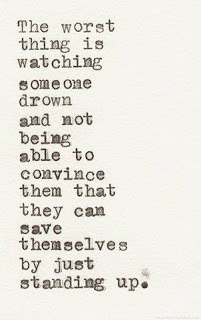
0drownFor me, the worst thing about being a therapist is seeing people in pain who are not  yet willing or ready to make a change. This includes people who resonate with the following statements:
  • I don’t think change is possible.
  • I’ve had these symptoms so long, they must be permanent.
  • Therapy can only take me so far.
  • Therapy hasn’t fixed it before, so it can’t.
  • I am my diagnosis.
  • If I’m not sick/mentally ill/in pain, who am I?

These statements are all arguable because the right therapy, the right techniques and therapist for an individual can overcome all of that. Continue reading “The Worst Thing About Being a Therapist”

Get Better Today

0autumn
That’s me in a session, at my old office.

A little background: At this point, I’ve been specializing in clearing trauma for over a decade. I studied psychology for my entire 7-year college education. Point is: I’ve been at this awhile and am trained in making people well; but, I’m also trained in making people well, whole, happy, and doing it FAST!

I’m a Certified Practitioner in Continue reading “Get Better Today”